Bills are reviewed without operational context
Energy bills are processed by finance teams who don’t operate the sites they relate to. Usage patterns, anomalies, and errors are hard to interpret, so issues are paid rather than investigated.

Energy Operations
We take responsibility for how your business generates, uses, stores, and buys energy, so costs fall and nothing slips between teams.
No hidden commission. Every fee we take is disclosed. You pay us directly.
Same energy. Smaller bill.

Most businesses can't see whether the price they pay is competitive. That's how overcharging persists.
Am I overpaying?Signals
Most organisations don’t manage energy as a day-to-day function. Responsibility is spread across teams, and decisions are made in fragments.
Energy bills are processed by finance teams who don’t operate the sites they relate to. Usage patterns, anomalies, and errors are hard to interpret, so issues are paid rather than investigated.
Supplier contracts are revisited every few years, often under time pressure, by people who don’t live with the outcome day to day. Decisions are made quickly, then fixed for the duration.
Solar, batteries, and other energy projects span finance, facilities, and operations. When benefits aren’t shared and ownership isn’t clear, progress slows and decisions drag.
These patterns aren’t accidental. They’re what happens when energy isn’t owned as a function.
Control
Energy costs aren’t driven by a single decision. They’re shaped by where energy comes from, when it’s used, and how it’s priced.
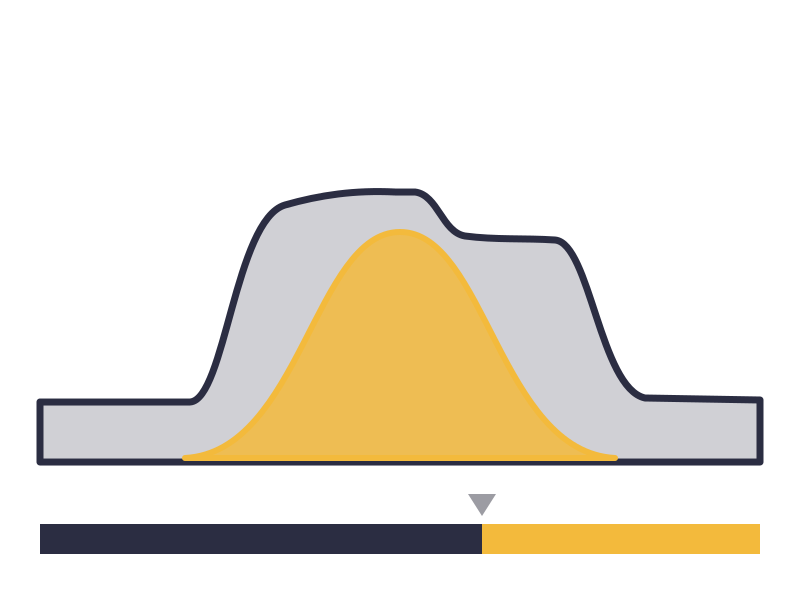
On-site supply
Produce energy where it’s used to reduce reliance on the grid.
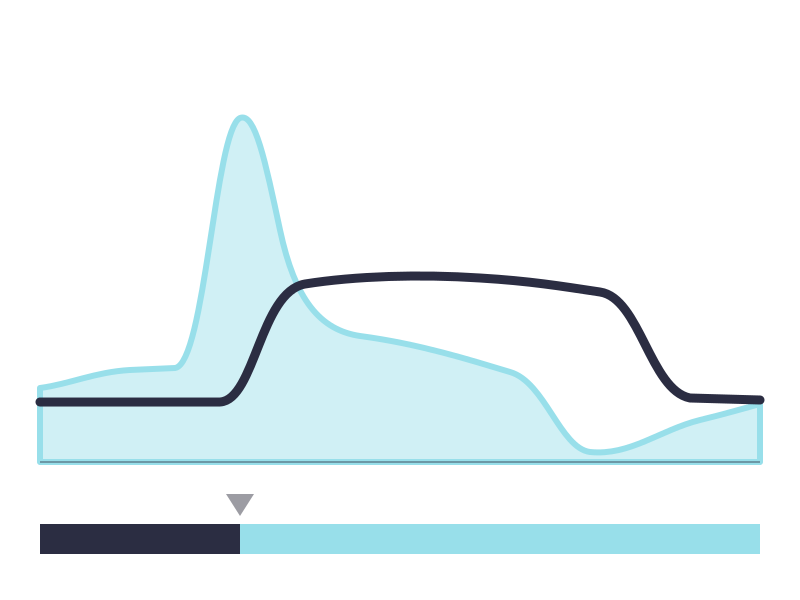
Control when energy is used
Use storage and flexibility to move consumption away from peak periods.
Match usage to the market
Match time-of-day tariffs and contracts to how energy is actually used.
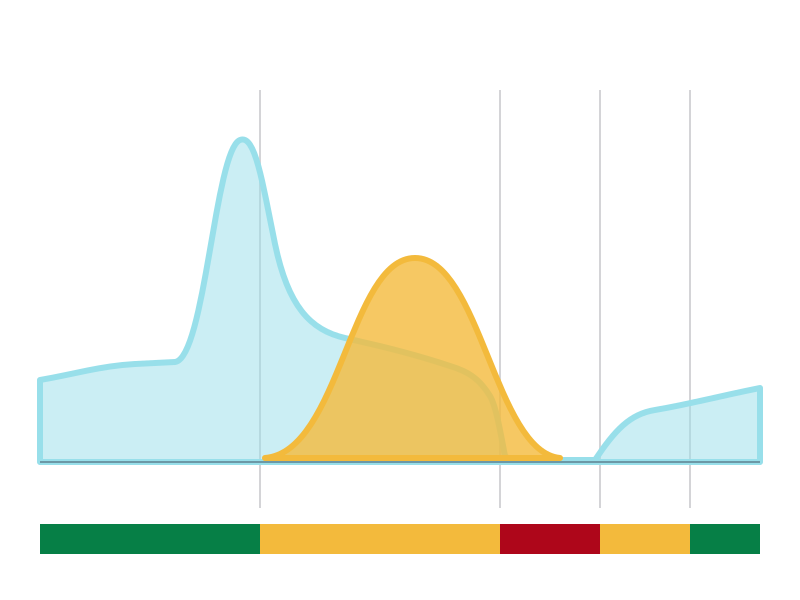
Colours show cost bands (cheap to expensive), not status alerts.
These elements don’t work in isolation. Control comes from managing them together, as a single function.
Start here
What it means to run energy as an owned business function, and why the category exists.
Why the market is opaque, where the hidden costs sit, and how to benchmark your position.
Why the structure of your tariff matters as much as the rate, especially on half-hourly sites.
Why projects fail, why modelling comes before buying, and how to judge payback claims.
Incentives
We’re paid by you, not suppliers or technology vendors. That’s why renewal scepticism and project scrutiny aren’t bugs. They’re features.
Energy advice is usually shaped by incentives you never see. Ours isn’t.
You pay us directly, on a clear retainer, with no margin stacking, volume bonuses, or supplier rebates.
Every option is assessed on cost, risk, and outcome, not on who benefits if you say yes.
Renewals, projects, and suppliers are questioned by default, because our incentives don’t change after the contract is signed.
Electricity cost reduction
70%
£22,566 to £6,694 a year
An NHS GP practice
An NHS GP practice ran the full Energy Operations sequence: correct the tariff, size solar to measured load, then add a battery. Annual electricity cost fell 70%.
Annual saving
£86,779
commodity cost, no capital spent
A multi-site commercial operator
A bundled flexible rate priced the portfolio as average. Re-pricing the actual half-hourly load against a day-ahead pass-through structure cut commodity cost by £86,779 a year.
Every case study here is dated and anonymised. We never name a customer, and every figure traces to the underlying analysis.
Next step
Energy doesn't need more tools.
It needs ownership.
Start with a fixed-fee energy review, built from your own meter data, or request a benchmark of what you should be paying.